
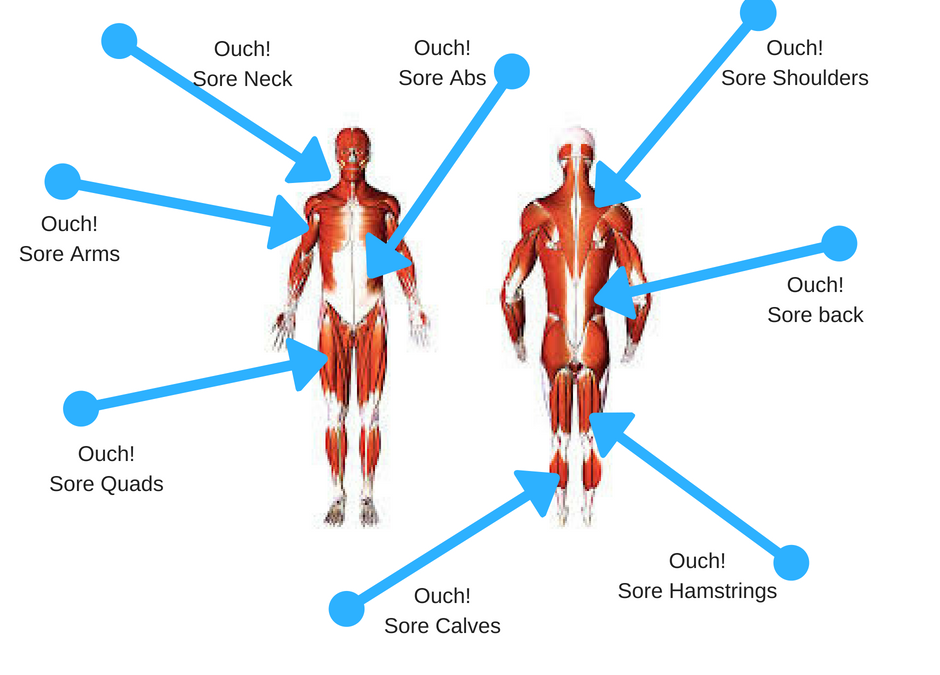
Have you ever felt sore after starting a new activity or pushing yourself harder than usual during a workout or sports activity?
Muscle soreness that shows up a day or two after exercising can affect anyone, regardless of your fitness level.But don’t be put off. This type of muscle stiffness or achiness is normal, doesn’t last long, and is actually a sign of your improving fitness.
Why do my muscles feel sore after exercising?
Sore muscles after physical activity, known as delayed onset muscle soreness (DOMS), can occur when you start a new exercise programme, change your exercise routine, or increase the duration or intensity of your regular workout.
When muscles are required to work harder than they’re used to or in a different way, it’s believed to cause microscopic damage to the muscle fibres, resulting in muscle soreness or stiffness.
DOMS is often mistakenly believed to be caused by a build-up of lactic acid, but lactic acid isn’t involved in this process.
Who can DOMS affect?
Anyone can develop DOMS, even those who have been exercising for years, including elite athletes.
It can be alarming for people who are new to exercise and may dent their initial enthusiasm to get fit.
The good news is the soreness will decrease as your muscles get used to the new physical demands being placed upon them.
The soreness is part of an adaptation process that leads to greater stamina and strength as the muscles recover and build.
What type of activities can cause DOMS?
Any movement you’re not used to can cause DOMS. Taking up a new exercise, a harder than usual workout, or working your muscles in a different way can all cause DOMS.
Static stretching or warming up the muscles before or after exercise does not prevent soreness.
Overstretching can by itself cause soreness.
How long does DOMS last for?
DOMS typically lasts between 3 and 5 days. The pain, which can range from mild to severe, usually occurs 1 or 2 days after the exercise.
This sort of muscle pain shouldn’t be confused with any kind of pain you might experience during exercise, such as the acute, sudden and sharp pain of an injury, such as muscle strains or sprains.
How can I treat DOMS?
There’s no one simple way to treat DOMS. Nothing is proven to be 100% effective.
If treatment is desired, any measure that increases blood flow to the muscle, such as low-intensity activity, massage, nerve mobilization, hot baths, or a sauna visit may help somewhat.
These things may help ease some of the symptoms:
- rest
- ice packs
- painkillers
- massage
DOMS doesn’t generally require medical intervention. But you should seek medical advice if the pain becomes unbearable, you experience heavy swelling, or your urine becomes dark.
How can I prevent DOMS?
One of the best ways to prevent DOMS is to start any new activity programme gently and gradually. Allowing the muscle time to adapt to new movements should help minimise soreness.
From experience I find that people have been put off continuing their exercise or sports programme because they have done too much too soon. Take it easy and build up gradually
There’s not much evidence that warming up will be effective in preventing DOMS. But exercising with warmed-up muscles will reduce your chance of injury and improve your performance.
While stretching has many benefits, there’s currently no evidence stretching before or after exercise helps reduce or prevent DOMS.
DOMS stands for Delayed Onset Muscle Soreness…. So now you know